

A personal message for the year ahead
As 2025 draws to a close, I would like to extend my sincere thanks to everyone who has followed, supported, and engaged with us in so many ways. Your interest, collaboration, and trust mean a great deal to us, and we look forward to continuing the journey together in the year ahead.
Together with our customers and partners, we advanced nano- and microfabrication in many meaningful ways – from groundbreaking pioneering research to industrial-scale production. This reflects our commitment to making high-resolution 3D structuring more accessible and impactful across photonics, biofabrication, maskless lithography, and further markets.
We also saw enormous progress in applications where speed, precision, and structure quality matter most. Examples range from advances in laser fusion targets to scalable plug-and-play coupling concepts for photonic integration, illustrating how emerging needs in research and industry are driving new levels of performance.
We wish you a peaceful holiday season and a healthy, successful 2026.
Martin Hermatschweiler
CEO, Nanoscribe

Thank you for a great 2025
Here are some of the moments that shaped this year
IPX-Clear with a new level of transmittance
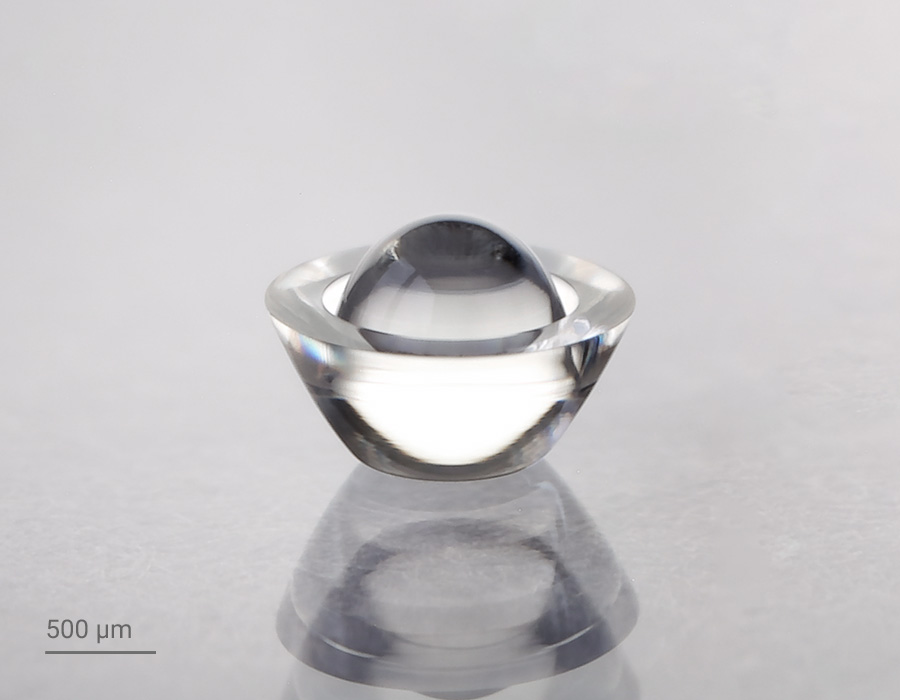
With exceptional transmission across the visible spectrum, IPX-Clear enables accurate microoptical structures, smooth surfaces, and reliable performance from micron to millimeter scales.
A new chapter for 2.5D Grayscale Lithography

Quantum X litho builds on the Quantum X platform and is enhanced with a confocal alignment to support rapid prototyping, patterning, wafer-scale production, and aligned mastering.
A guided path to industrial-scale production

Our turnkey process-line solution supports your projects from initial concepts to full-scale manufacturing, offering expert guidance and industry-proven workflows at every stage.
3D nanoprinting shaping the future of fusion energy

From dense shells to finely structured foams, our technology provides precision and throughput needed to advance reproducible laser fusion targets in next-generation fusion programs.
Expert support in micro-optics manufacturing
Our manufacturing service with Printoptix offers easy access to professional micro-optics production — from design to scalable manufacturing, powered by Nanoscribe technology.
Trusted by 400 labs and fabs worldwide
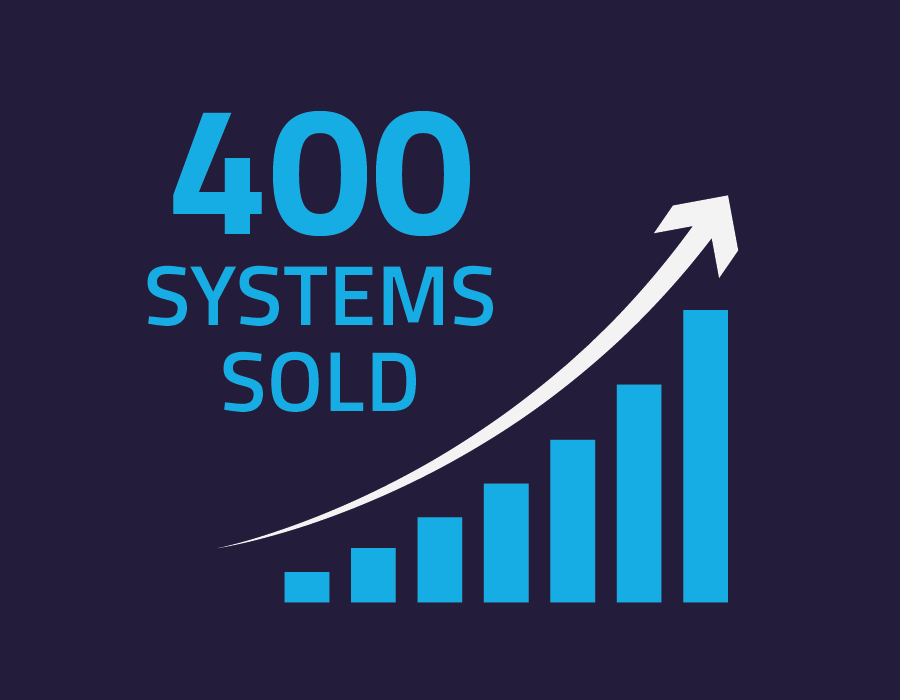
In 2025, we reached 400 installed systems. This growing base signals momentum from lab-scale research toward industrial adoption of 3D nano- and microfabrication.
Thank you for moving things forward in 2025
Optics & photonics highlights from 350+ customer publications
Scalable plug-and-play fiber-to-chip coupling
Researchers at Heidelberg University demonstrated a plug-and-play fiber-chip connector with a microoptical interlock for scalable photonics packaging.
3D-printed splitter for multicore fibers
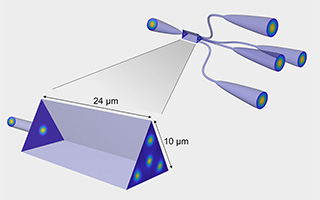
Researchers at Vrije Universiteit Brussel developed a 3D-printed 1×4 splitter for multicore fibers, showing low-loss coupling and opening paths for future photonic applications.
Scalable 2.5D aspherical micro-optics
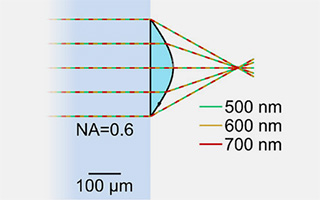
A Stuttgart-based research team fabricated 2.5D aspherical micro-optics using 2GL® and replicated them, illustrating a clear route from precision prototyping to scalable production.
Flexible OCT catheter for the middle ear
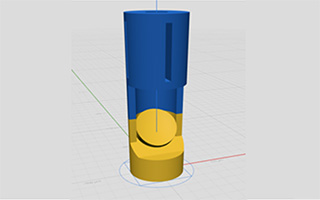
A multi-institutional U.S. team used a flexible OCT catheter with a 3D-printed reflective objective for minimally invasive imaging of the porcine middle ear.
Tunable pulsed lasers with a metafiber
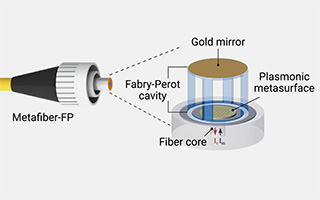
A research team from China and Switzerland developed a 3D-printed metafiber that functions as both absorber and filter, enabling wavelength-tunable pulsed lasers.
A new class of soft-matter photonic chip
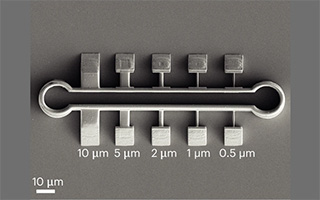
A new photonic chip combines tunable liquid-crystal microlasers with laser-printed polymer waveguides, enabling all-optical control of light using resonant STED.
How we fabricated our miniature Advent arrangement
It started like a tiny holiday engineering challenge: could we build an Advent centerpiece small enough to sit on a fiber array and still shine with the finest details?
First, we shaped the idea as a set of miniature parts. Every candle, every festive element – each piece began as its own 3D model. Step by step, the centerpiece took form as a digital assembly ready for fabrication at the micro- and nanoscale. But a design is not a centerpiece yet. The real staging happened in nanoPrintX. Like setting a scene, we placed every component into position, adjusted the layout, and scaled each element until the composition felt balanced and intentional. This is where nanoPrintX shines: an easy, hands-on workflow for our Quantum X systems that makes print preparation feel clear, fast, and surprisingly intuitive.


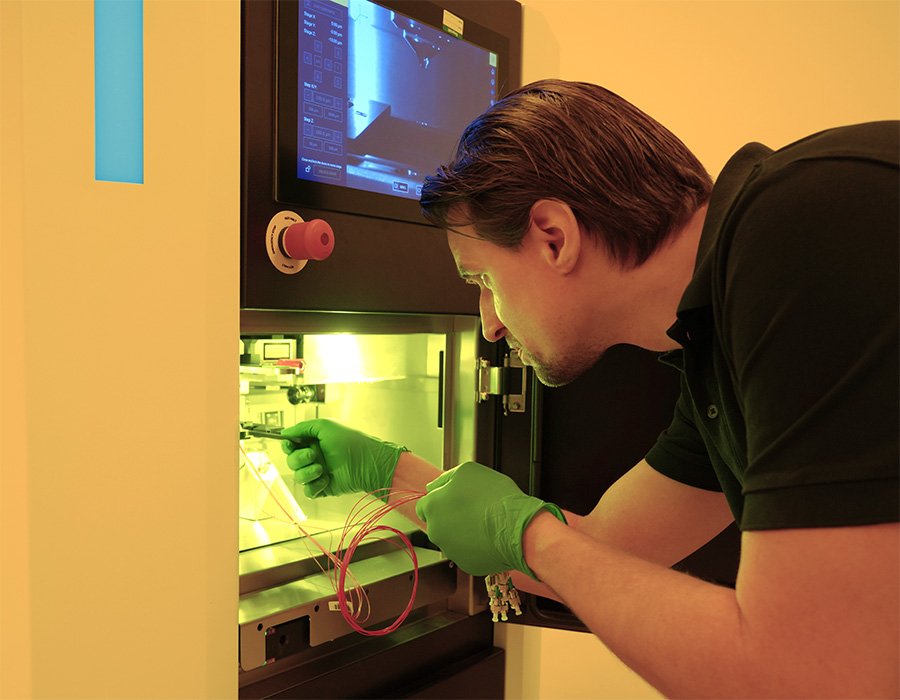
Then came the moment of truth: printing. With Quantum X align, we didn’t just fabricate the structure, we fabricated it exactly where it needed to be. Using the system’s alignment capability, we printed the complete Advent centerpiece precisely aligned to optical fibers. The fiber array provides a perfect platform for controlled laser illumination during imaging, while the printed geometry stays crisp and recognizable under the microscope. Even at this small size, the silhouette is immediately readable, and the surfaces retain the subtle features that make the scene feel “crafted” rather than purely technical.
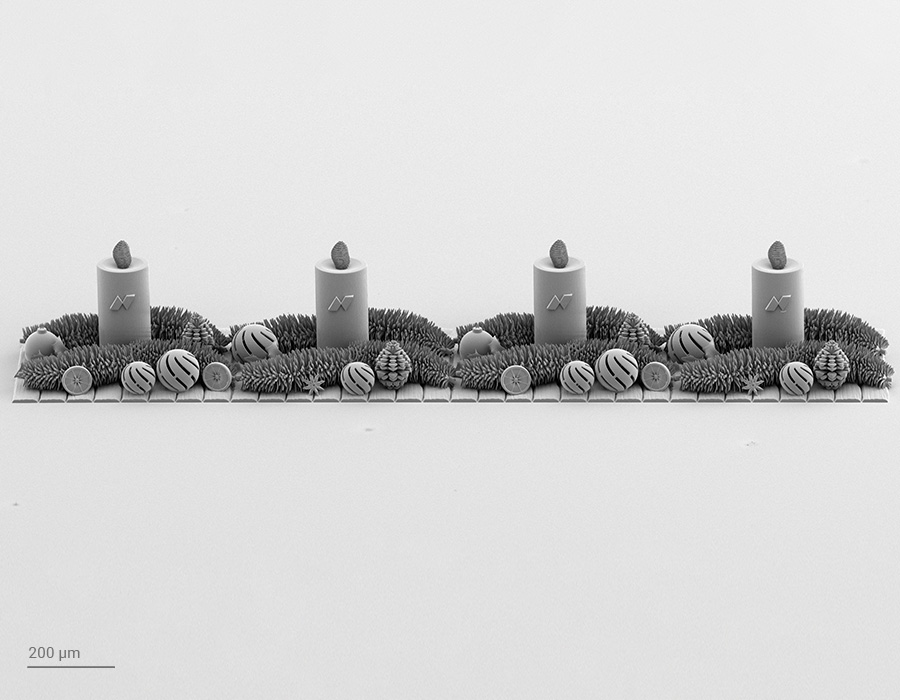
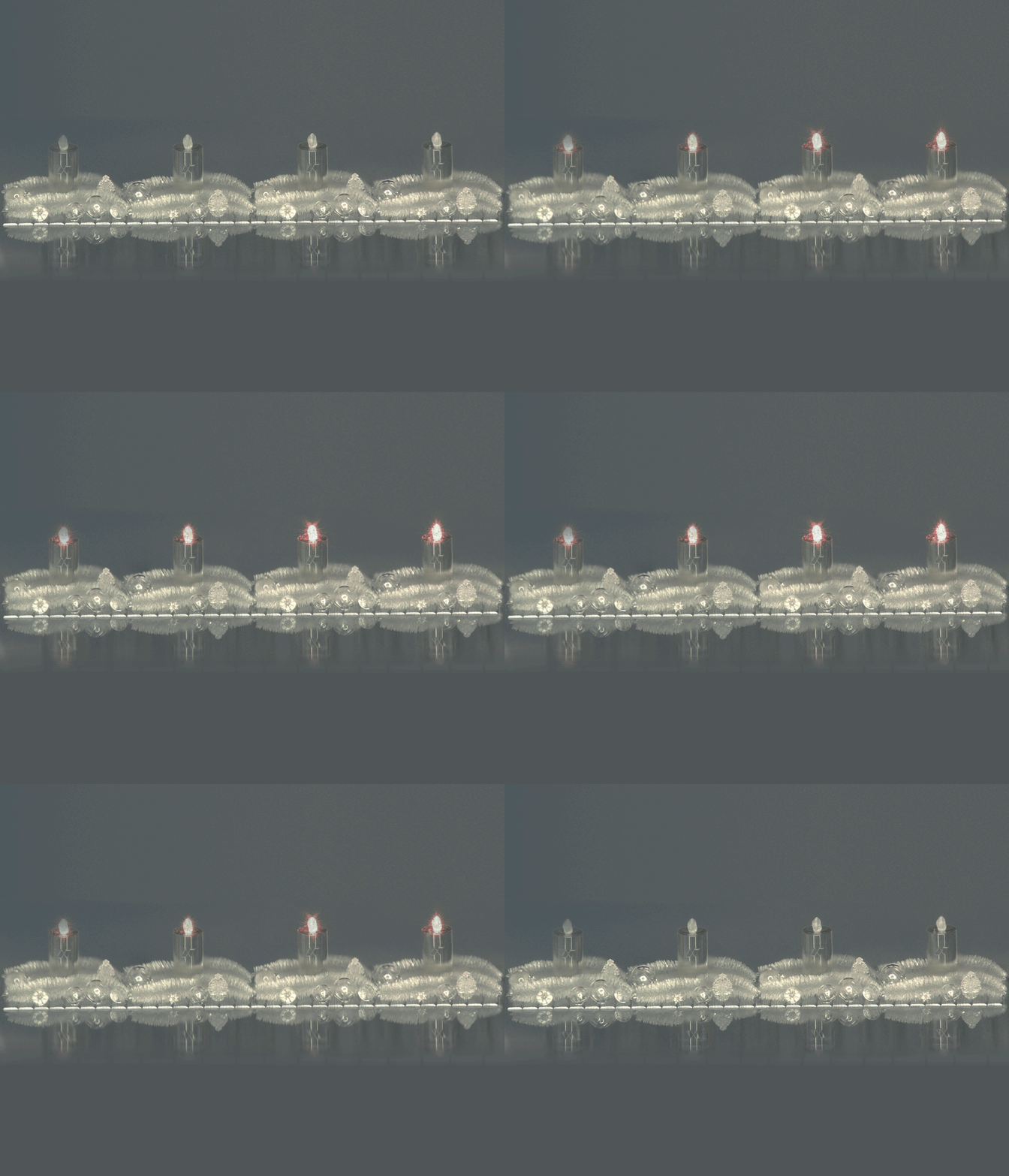

Of course, this story deserves a close-up finale. To reveal the finest features, we brought the finished piece to the scanning electron microscope (SEM) for crisp, high-detail imaging. Then we captured additional views with an optical microscope to show how the structure appears in optical light. And finally, as a macro shot, we captured the miniature Advent arrangement sitting on a fiber inside a full-scale Advent wreath. A seasonal motif, built step by step: designed, arranged, aligned, printed, and photographed – where micro- and nanoscale fabrication meets a bit of Advent sparkle.