

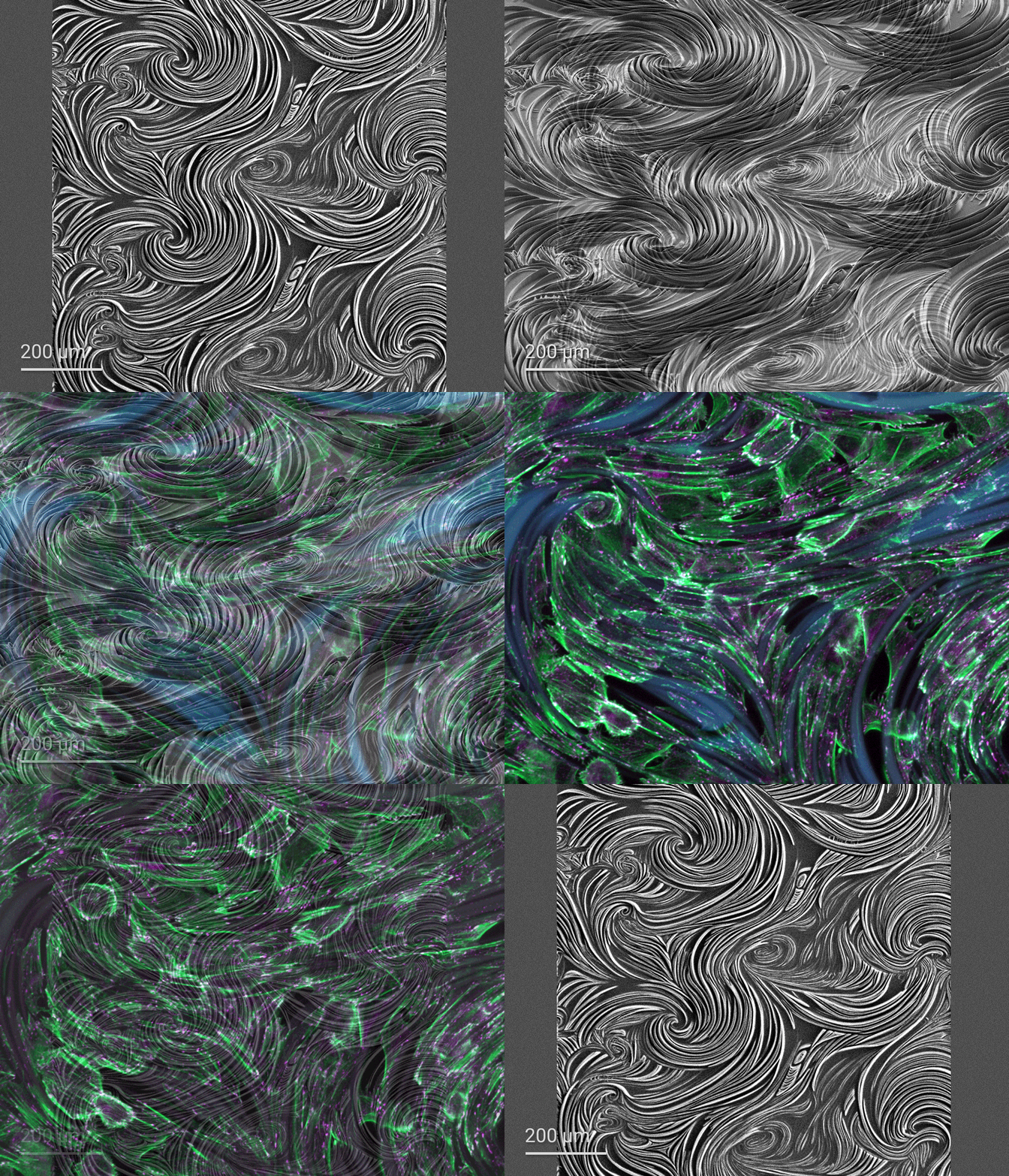
2.5D surface patterning with two-photon lithography
From biomimetic wettability control to optical and biomedical surfaces, targeted interactions depend on precisely defined topographies. Two-Photon Grayscale Lithography (2GL®) enables maskless fabrication of micro- and nanoscale surface patterns with controlled height profiles for rapid prototyping and scalable replication.
Surface patterning for tailored functionality
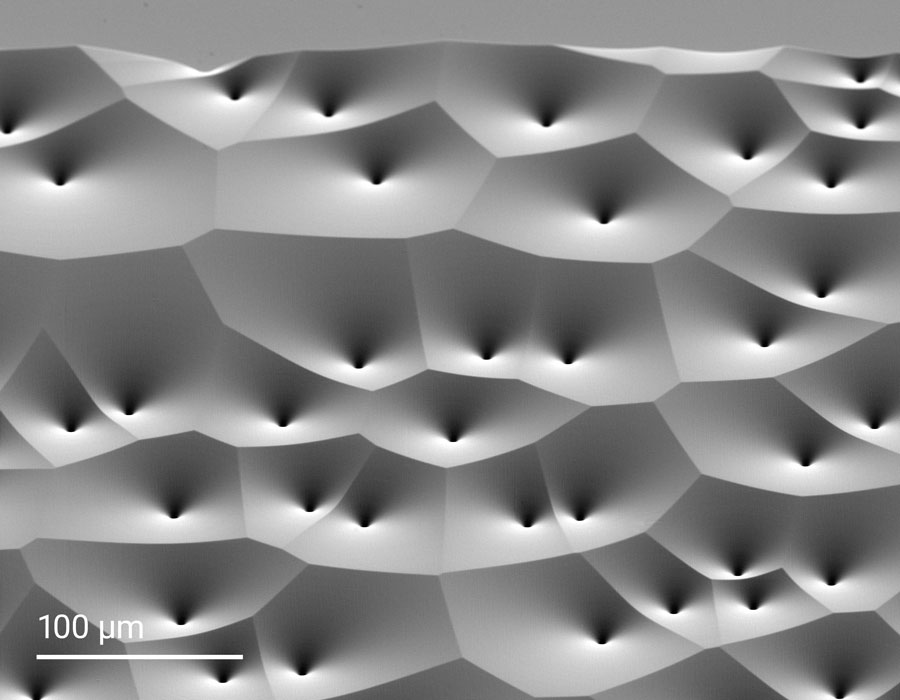
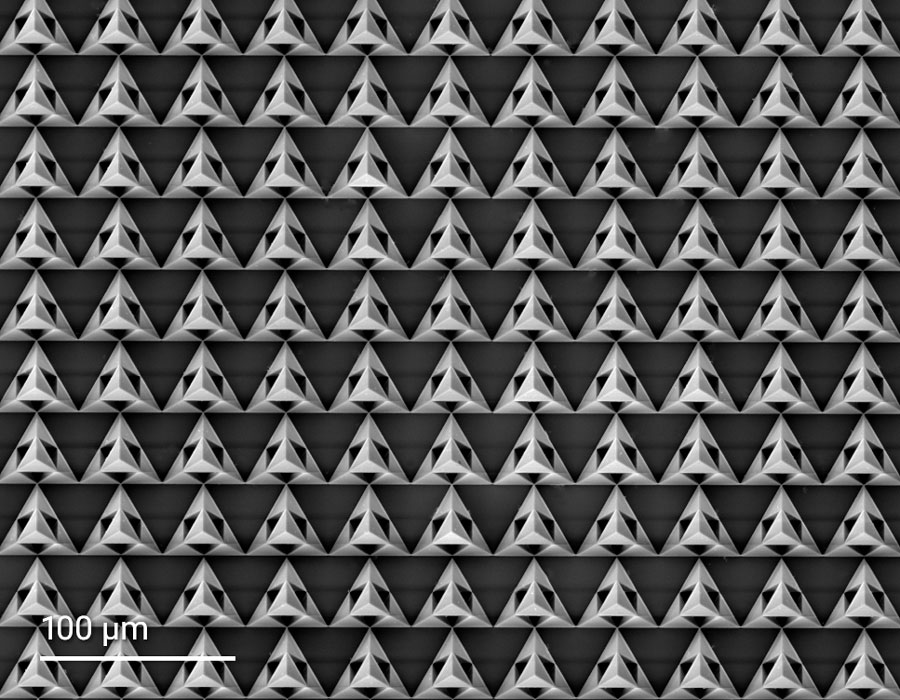
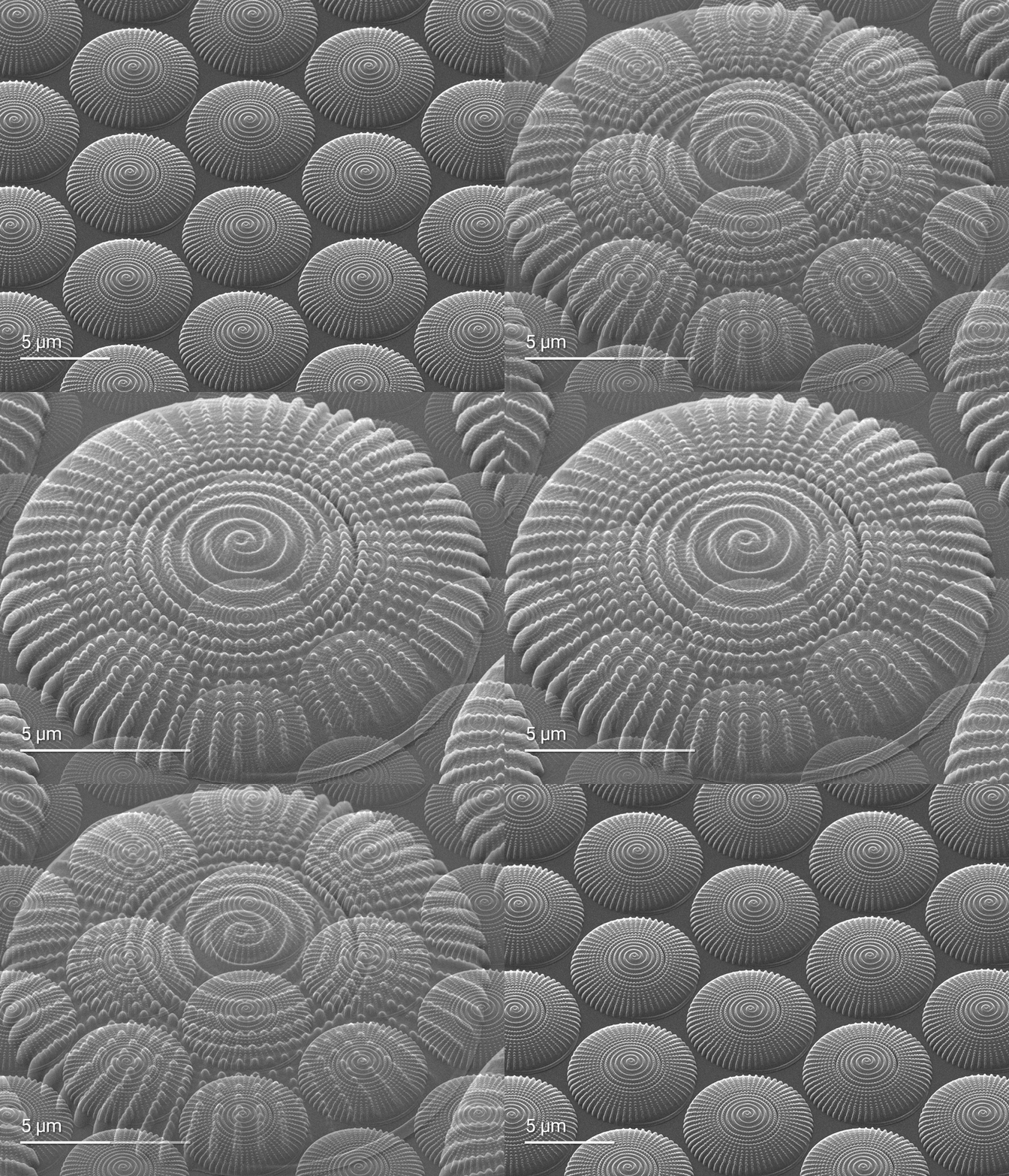
Surface patterning for functional surface engineering
Surface topographies influence how a material or device interacts with liquids, particles, light, and biological cells. Surface patterning creates micro- and nanoscale topographies that can tune wettability, adhesion, optical response, or cell behavior. In surface engineering, precisely fabricating these structures provides an additional design parameter for controlling such interactions beyond the properties of an unpatterned surface.
Turning micro- and nanoscale topography into surface function
From 2.5D reliefs to hierarchical textures, surface geometry can influence wettability and fluid transport, particle adhesion, optical response, and cell migration. Combined with surface chemistry, it provides a second design parameter in surface engineering for controlling behavior and functions such as superhydrophobicity and self-cleaning, contamination control, optical beam shaping, and defined cell-surface interactions. In surface engineering, biomimetic designs offer useful starting points, but their function depends on accurately reproducing feature size, height, curvature, and hierarchy. Nanoscribe’s Two-Photon Grayscale Lithography (2GL®) fabricates surface topographies with high precision and throughput and supports rapid design iteration as well as master fabrication for replication.
High-precision grayscale lithography for functional surfaces
2GL® combines additive fabrication with ready-to-use negative-tone resins to directly transform digital models into 2.5D surface patterns. These structures can be used as prototypes for functional testing or as master templates for replication.
-
Rapid, maskless 2.5D surface patterning: 2GL® processes digital grayscale designs with more than 4,000 exposure levels to fabricate complex surface topographies, enabling fast design changes without photomasks.
-
High shape and surface quality: Shape accuracy down to ≤ 200 nm and surface roughness down to Ra ≤ 5 nm support precisely defined surface patterns for surface engineering applications.
-
Tall topographies with simplified processing: 2GL® combined with aberration-free Dip-in Laser Lithography and photoresins enables structures up to 1,000 µm in height. Ready-to-use negative-tone photoresins typically save you from cumbersome and error-prone processes including spin-coating and pre- and post-baking and are insensitive to environmental and development conditions.
-
Wide range of compatible substrates: 2GL® supports transparent, opaque, conductive and non-conductive substrates, including glass, silicon, and prepatterned wafers.
-
Consistent topographies across large areas: For large-area surface patterning, automatic tilt compensation corrects substrate tilt to reduce height deviations and tilt-induced staircase effects, while 2GL® printing strategy minimizes visible stitching between writing fields.
-
Tailored materials for direct use: Nanoscribe’s photoresins offer material properties suitable for directly using printed surface patterns as final structures, eliminating the need for additional pattern-transfer processes such as etching.
-
From prototype to replication master: 2GL® fabricates surface patterns for functional testing and design iteration. The 2GL® technology can also produce master templates for nanoimprint lithography (NIL), hot embossing or micro injection molding.
-
Demonstrated replication workflows: 2GL® master templates have been used in replication workflows with specialist partners, including EV Group for NIL, kdg opticomp GmbH for micro injection molding, and Microworks GmbH for electroforming, considering the specific downstream processing steps for each replication method.
Your questions answered: surface patterning
What surface topographies can 2GL® fabricate?
Two-Photon Grayscale Lithography (2GL®) is suited to complex 2.5D surface patterns with continuously varying heights rather than simple binary structures. Examples include microlens arrays, Fresnel structures, microprisms, blazed profiles, biomimetic textures, microfluidic features, and other functional relief patterns with defined slopes, curvatures, and height variations.
How can surface patterns be replicated?
Nanoscribe’s negative-tone photoresins can be used directly as functional prototype materials, allowing engineers to test surface geometry and validate performance without first transferring the surface pattern through etching, UV molding, electroplating or other intermediate process steps.
Once the design is validated, the same 2GL® digital workflow can be used to fabricate master templates for replication processes such as nanoimprint lithography, hot embossing, micro injection molding, or electroforming. This creates a direct path from functional prototype to scalable replication.
How does 2GL® improve surface patterning?
Two-Photon Grayscale Lithography (2GL®) modulates the voxel size during fabrication to create precise height variations directly from digital designs. This reduces the number of scanning layers compared with conventional layer-by-layer approaches, enabling faster fabrication while maintaining high shape accuracy and smooth surface contours.
For surface engineering applications, this supports rapid design iteration, maskless prototyping, and fabrication of master templates for replication.
What determines the quality of surface patterns?
Surface quality depends on several factors, including lateral feature size, height control, surface roughness, substrate tilt, stitching accuracy, photoresin properties, and the chosen process parameters. For larger patterned areas, tilt compensation and calibrated stitching are important to avoid staircase effects and visible seams.
With 2GL®, high shape accuracy, smooth contours, and precisely controlled height profiles can be combined within the same digital fabrication workflow.
Get your project started with our products
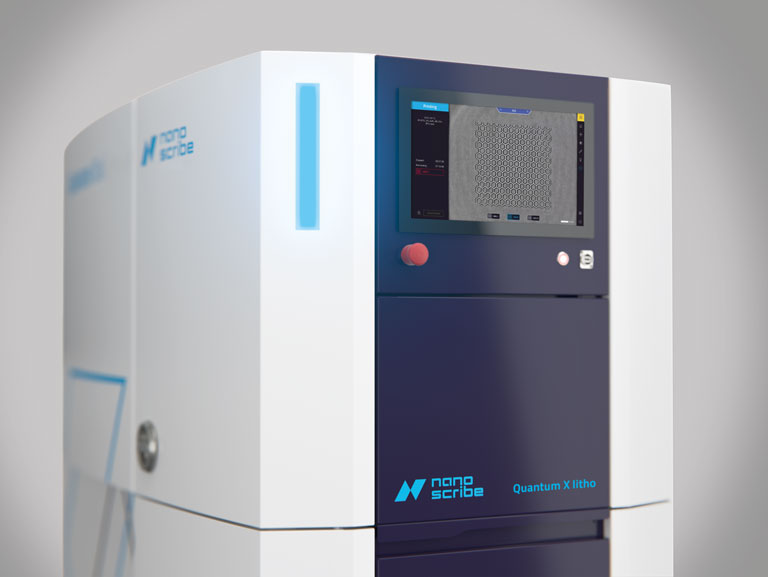
Quantum X litho
2.5D printing for rapid prototyping, patterning and mastering
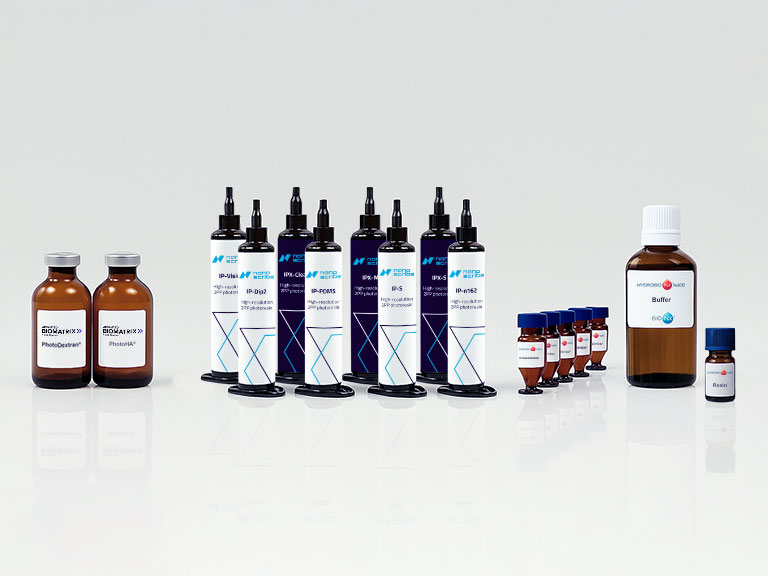
2.5D surface patterning materials
Materials for precise 2.5D surface patterning and structuring
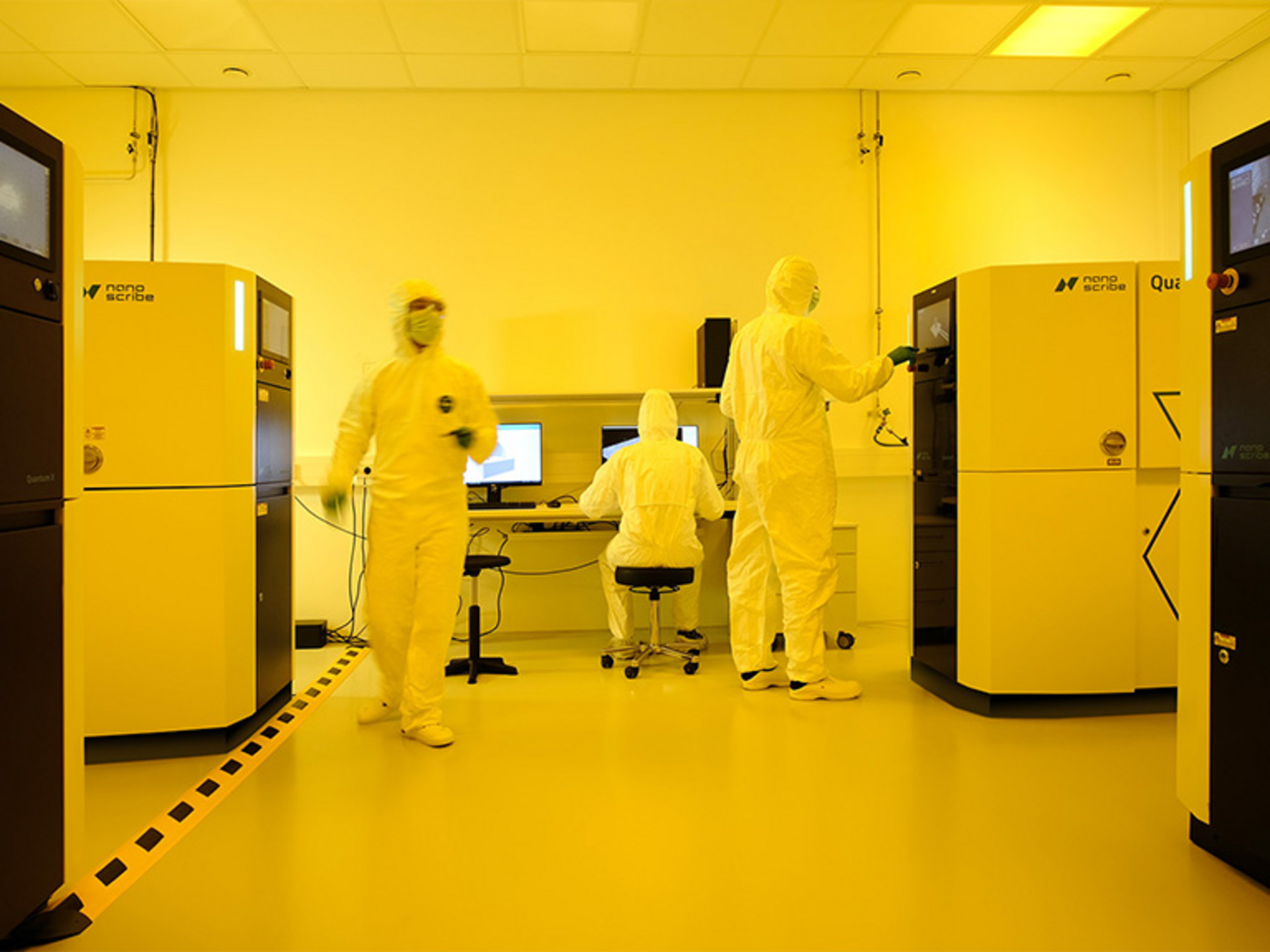
Turnkey process-line solution
Your guided path to industrial-scale microfabrication
Discover the potential of 2.5D surface patterning
Get inspired by these scientific highlights showcasing applications of surface patterning enabled by Nanoscribe’s high-resolution 2.5D lithography. Explore even more insights in over over 2,500 peer-reviewed scientific publications in our premium resources section – simply log in or register for free.
Co-tuning ultrathin ZnO films and programmable 3D textures to control lunar dust simulant adhesion
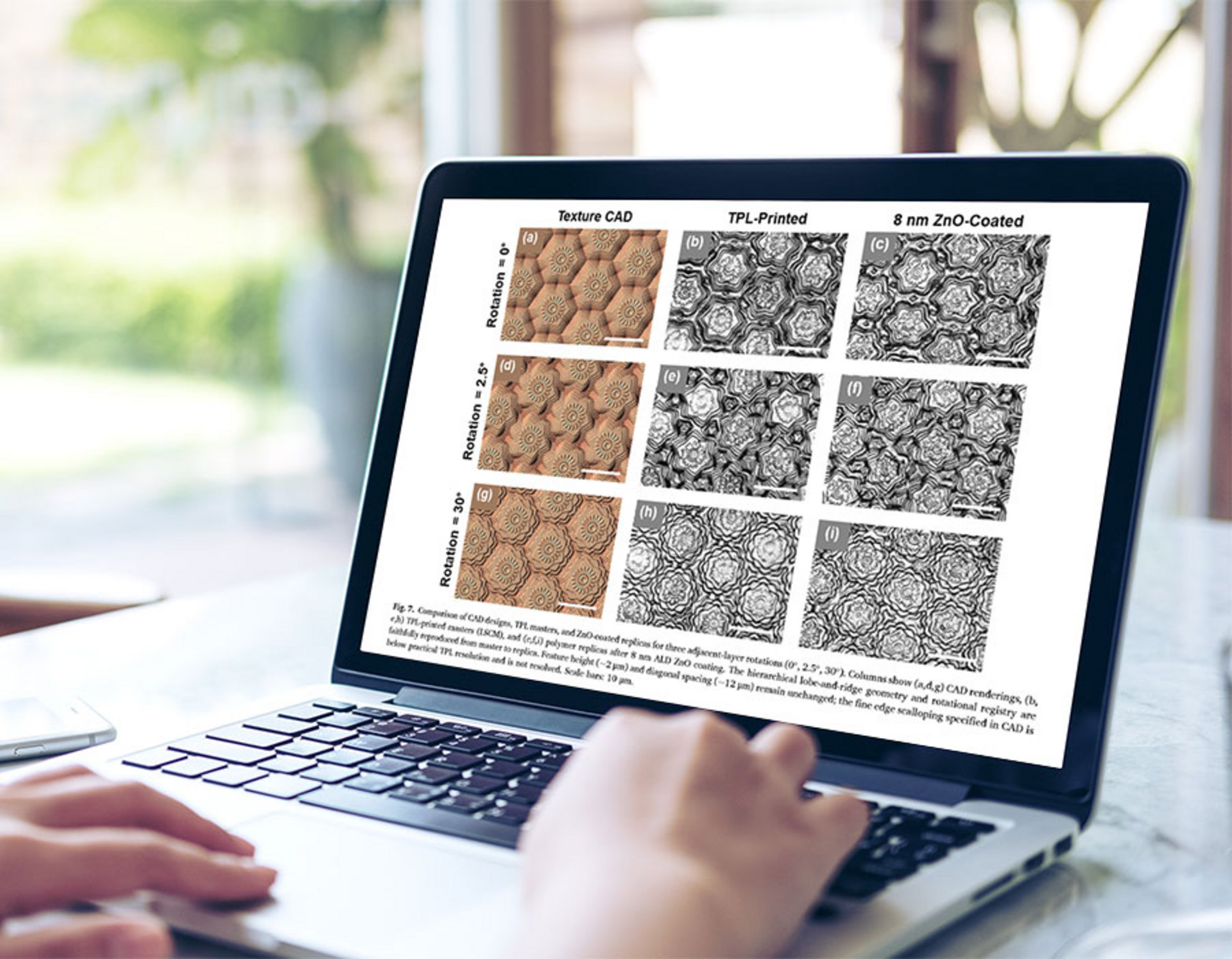
Authors: J. K. Hoskins, N. Harris, S. Threlfall, K. Lu, C. Miller, I. Rodriguez-Herrera, S. Chanda, X. Meng, M. Zou
Affiliation: University of Arkansas
Journal: Acta Astronautica, Volume 244 (2026)
Lithographic patterning of conformal thin films on 3D structures using...
Authors: X. Liu, Z. Che, Z. Maj, L. Lai, K. B. Gylfason, V. Dubois, S. N. Raja, G. Stemme & F. Niklaus
Affiliation: KTH Royal Institute of Technology
Journal: Nature Communications 17, 6201 (2026)
Laser-based 3D printing and optical characterization of optical...
Authors: B. S. Calin, R. C. Popescu, E. Tanasa, I. A. Paun
Affiliation: Center for Advanced Laser Technologies (CETAL), National University of Science and Technology Politehnica Bucharest, Horia Hulubei National Institute for Physics and Nuclear Engineering IFIN-HH
Journal: Scientific Reports 15, 3369 (2025)
Lotus-on-chip: computer-aided design and 3D direct laser writing of...
Authors: A. D. Lantada, S. Hengsbach, K. Bade
Affiliation: Universidad Politécnica de Madrid, Karlsruhe Institute of Technology (KIT)
Journal: Bioinspiration & Biomimetics 12 066004 (2017)