

Microfluidic systems with high-resolution 3D printing
Microfluidic systems for mixing, droplet generation, and particle or cell manipulation benefit from complex channel geometries and integrated 3D structures. Nanoscribe’s 3D printing by 2GL® enables their fabrication through master fabrication for PDMS replication and direct printing of 3D microstructures and microchannels.
3D microfluidic systems for controlled flow
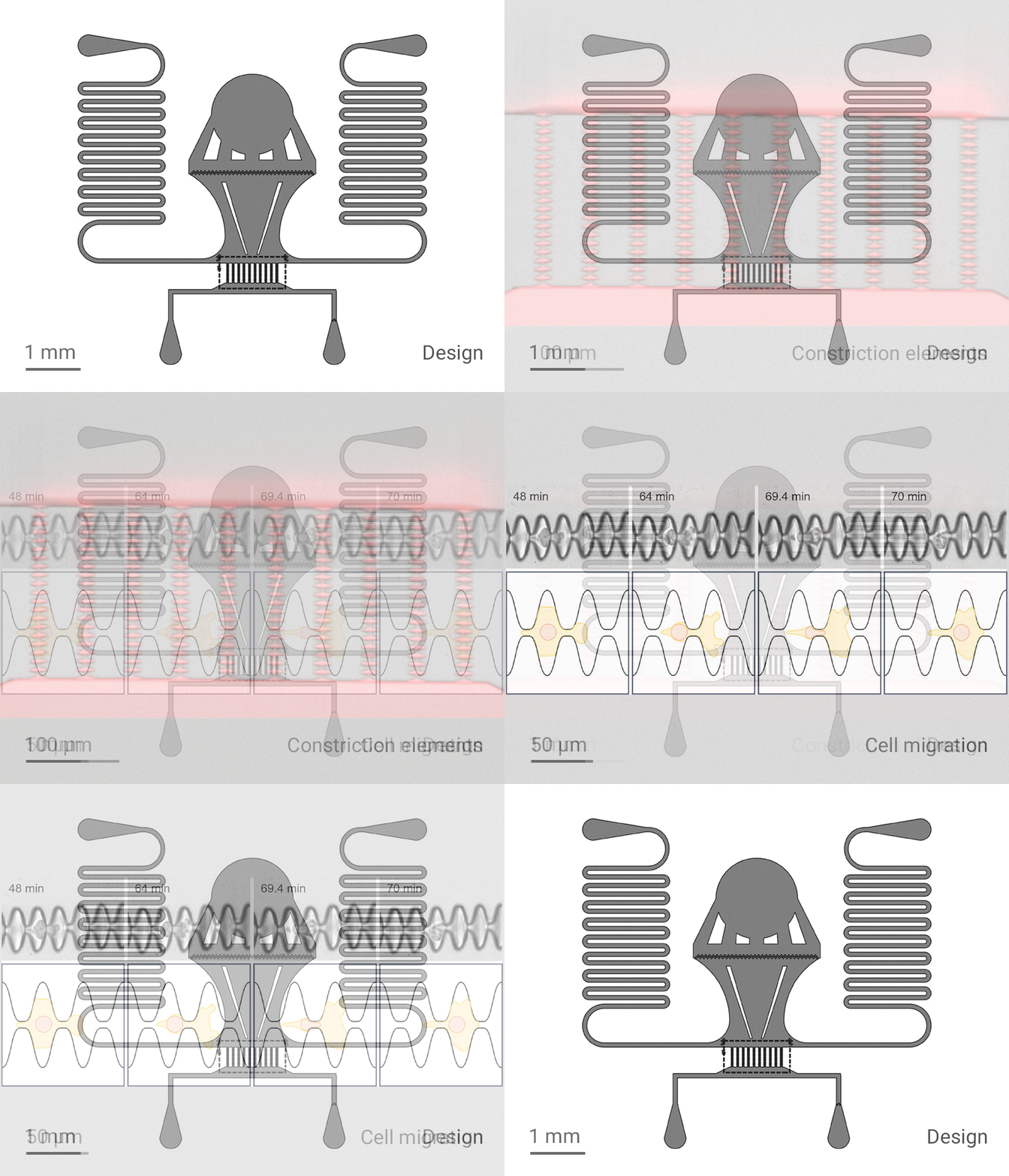
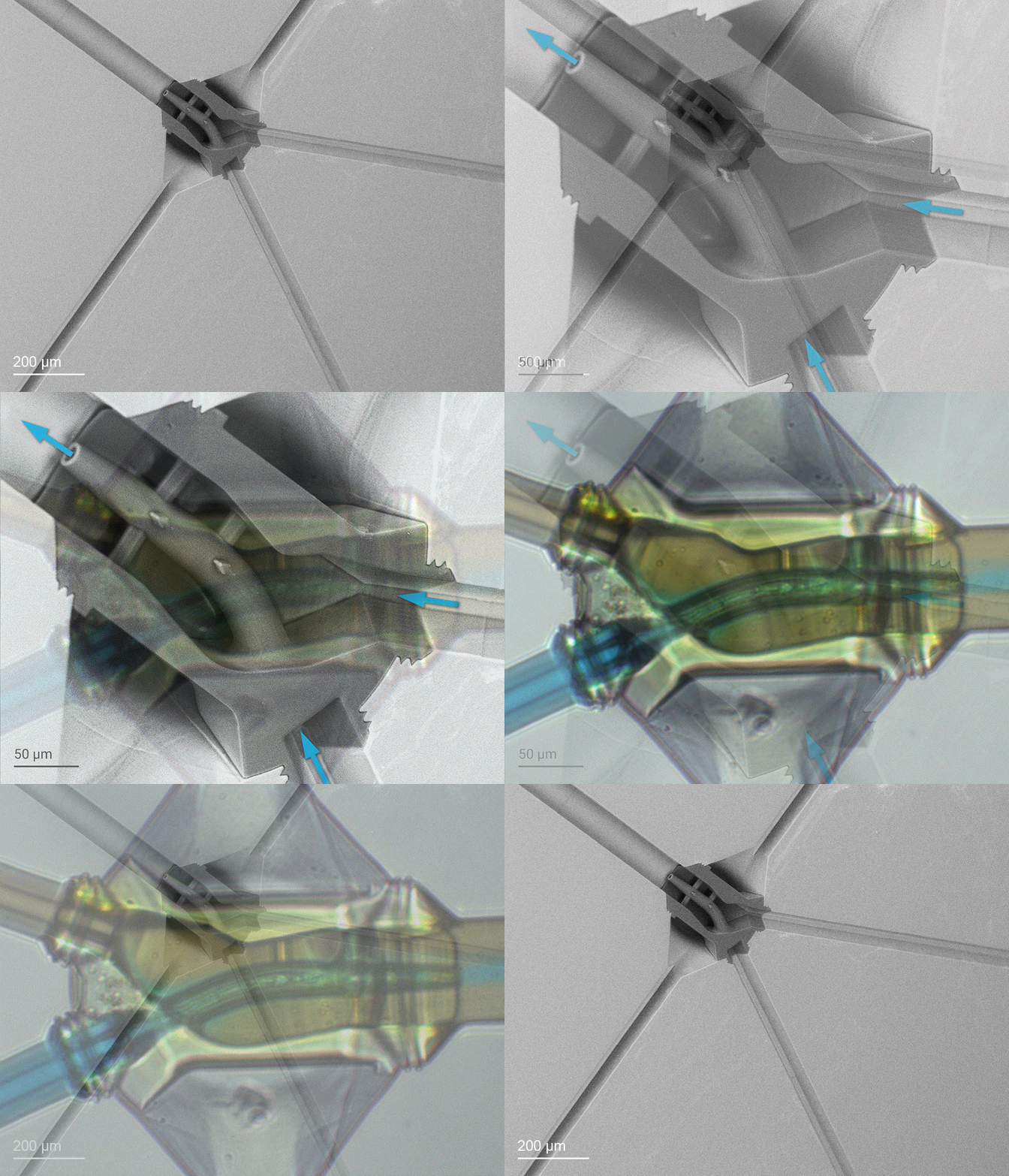
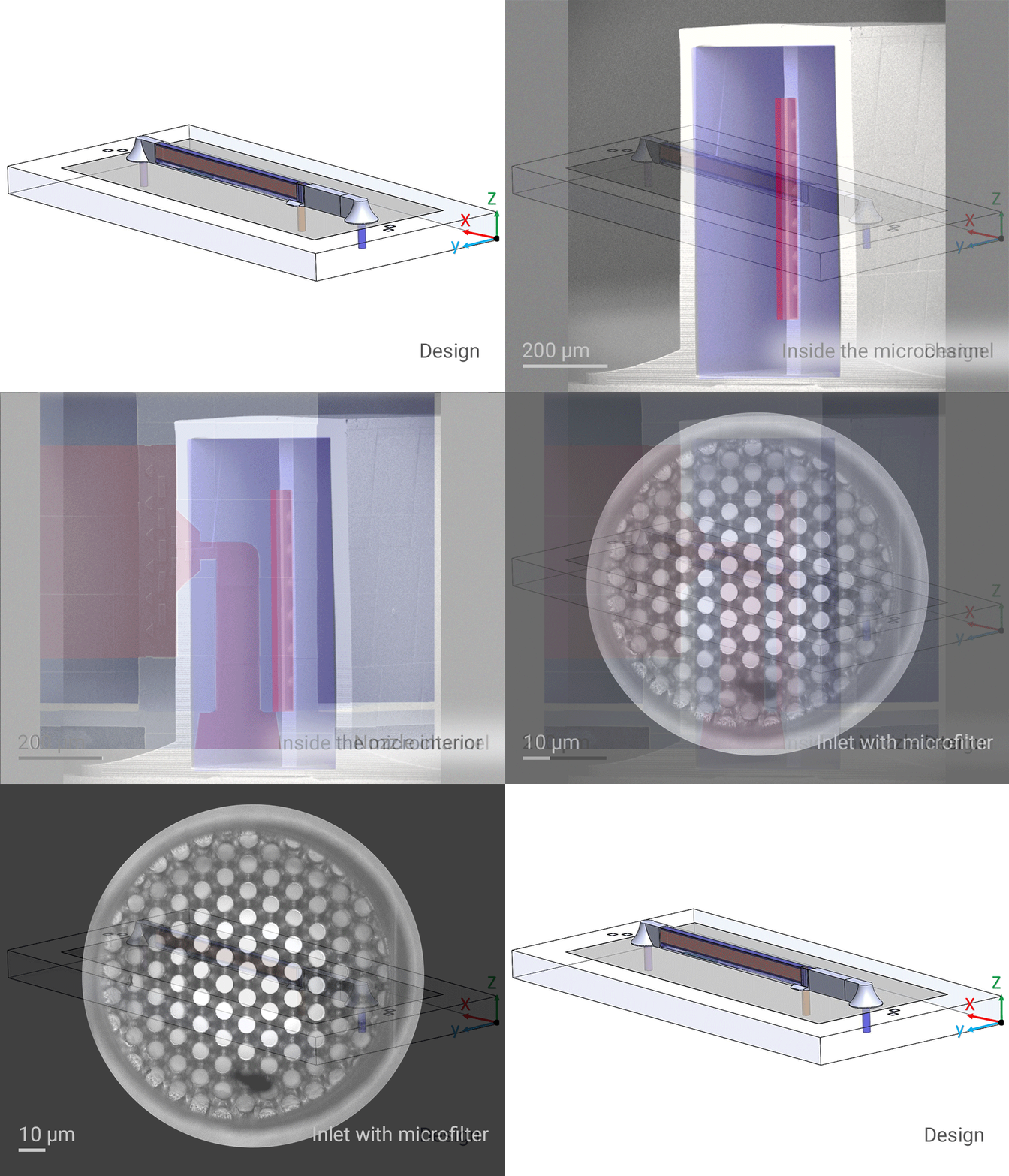
Microfluidic systems beyond planar limits
Microfluidic systems combine microfluidic channels and chambers with functional elements such as nozzles for droplet generation, mixers for fluid mixing, and filters or traps for particle and cell manipulation. Their dimensions, transitions and spatial arrangement determine how liquids flow and mix, how streams split or focus, and how droplets form. The challenge is to turn these flow architectures into physical structures that deliver the intended fluidic function. In conventional microfluidic fabrication, UV photolithography is well established for fabricating masters for predominantly planar channel networks. However, innovative microfluidic concepts increasingly combine complex channel geometries with integrated 3D functional elements, making them difficult to realize with conventional planar fabrication methods.
High-resolution fabrication of complex microfluidic systems
Nanoscribe’s proprietary Two-Photon Grayscale Lithography (2GL®), based on Two-Photon Polymerization (2PP), enables high-resolution additive fabrication of complex 2.5D and 3D microfluidic structures. For soft lithography, 2GL® can fabricate polymer masters with multi-level structures, ramps and tailored surface topographies that can influence hydrophilic or hydrophobic behavior. PDMS casting and bonding transfer the master geometry into a sealed PDMS microfluidic device. Automated alignment to fiducials or markers enables precise 3D printing of functional microstructures within microfluidic channels or chambers of prefabricated microfluidic devices, including commercially available chips. Alternatively, 3D printing by 2GL® enables the fabrication of the fluidic architecture itself, including tubular microfluidic channels, coaxial nozzles and compact mixers.
Together, these approaches support rapid manufacturing of microfluidic systems, from functional prototypes and masters to complete microfluidic devices for droplet generation, nanoparticle processing and cell culturing.
From microfluidic masters to direct 3D fabrication
Nanoscribe’s Quantum X systems enable the fabrication of microfluidic masters for soft lithography, directly printed 3D microfluidic systems and aligned structures inside prefabricated devices.
-
High-resolution 2.5D fabrication: 2GL® dynamically controls voxel height to create discrete steps, ramps, and tailored surface topographies for microfluidic systems used as polymer masters and functional structures.
-
Freeform 3D fabrication: High-resolution 3D printing enables the fabrication of freeform fluidic structures such as tubular microfluidic channels, channels with non-rectangular cross-sections, coaxial nozzles, mixers, and other integrated 3D elements.
-
Aligned in-chip integration: Automated alignment positions 3D microfluidic structures such as mixers, filters, and valves relative to fiducials or markers for precise printing inside prefabricated microfluidic devices, channels and chambers.
-
Transparent material for optical analysis: Nanoscribe’s portfolio includes IPX-Clear, a highly transparent, low-autofluorescence photoresin, and GP-Silica for glass microfabrication, enabling optical inspection and analysis of directly fabricated microfluidic systems.
-
Rapid digital iteration: Maskless digital workflows support fast adjustments of microfluidic channel layouts, height profiles, surface topographies and functional structures without new photomasks or conventional tooling.
-
Masters for replication: High-resolution polymer masters can be transferred into PDMS microfluidic devices by soft lithography, linking rapid prototyping with repeatable fabrication of complete microfluidic designs.
Your questions answered: microfluidic systems
How are microfluidic systems fabricated?
Microfluidic systems can be fabricated using several methods depending on geometry, material, resolution and production volume. Established approaches include UV photolithography for master fabrication and subsequent soft lithography for PDMS microfluidic devices, wet or dry etching for glass and silicon, machining and laser processing for prototyping, and replication methods such as hot embossing or micro injection molding for scalable production.
Nanoscribe’s high-resolution additive microfabrication complements these methods where microfluidic devices require multi-level structures, channels with varying heights, complex cross-sections, integrated 3D structures or rapid digital iteration for prototypes and masters for replication.
What are the benefits of 3D-printed microfluidics?
Nanoscribe’s 3D printing by 2GL® enables complete microfluidic systems combining 3D channel networks with functional elements, such as nozzles, mixers, filters, and particle traps. This geometric design freedom supports innovative approaches to fluid control, mixing, droplet generation, and particle or cell manipulation beyond the capabilities of conventional planar fabrication methods.
Direct fabrication from digital designs also enables rapid prototyping and design iteration. Alternatively, 3D printing can produce masters for replication or functional structures inside prefabricated microfluidic devices.
How are 3D-printed master templates used for PDMS?
A high-resolution polymer master defines the geometry of the microfluidic channels, chambers and other structures of the microfluidic device as raised features. Liquid PDMS is cast over the master and cured before the replica is removed and bonded to another substrate to form an enclosed PDMS microfluidic device.
Compared with conventional photolithographic masters, master fabrication using Two-Photon Grayscale Lithography can provide greater design freedom for varying channel heights, ramps and tailored surface topographies while remaining compatible with established soft lithography workflows for PDMS microfluidic devices.
When is replication preferable to direct printing?
Master-based fabrication is useful when multiple copies of the same microfluidic system are required or when PDMS microfluidic devices are preferred for the final application. The printed structure serves as a master, while replication produces the functional devices.
Direct 3D printing is attractive for rapid prototyping and architectures that require complex three-dimensional flow paths or integrated functions. The appropriate route therefore depends on geometry, material requirements, development stage and intended replication volume.
Get your project started with our products
Quantum X shape
Most versatile, powerful system for advanced research
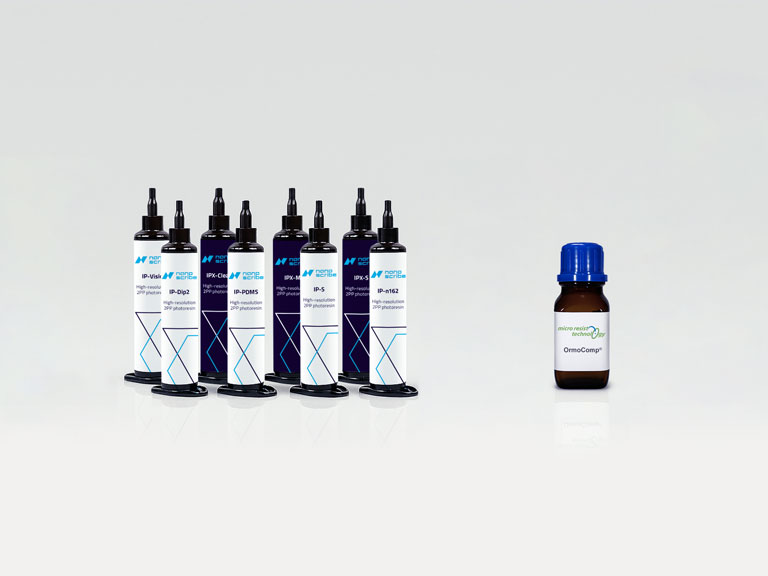
High-res 3D printing materials
High-resolution 3D printing of complex microstructures
Discover the potential of microfluidic systems
Get inspired by these scientific highlights showcasing microfluidic systems created with Nanoscribe’s high-resolution 3D printing technology. Explore even more insights in over 2,500 peer-reviewed scientific publications in our premium resources section – simply log in or register for free.
Stopping a Multilayered Co‐Axial Flow in a 3D Printed Microchannel with Cascaded Nozzles
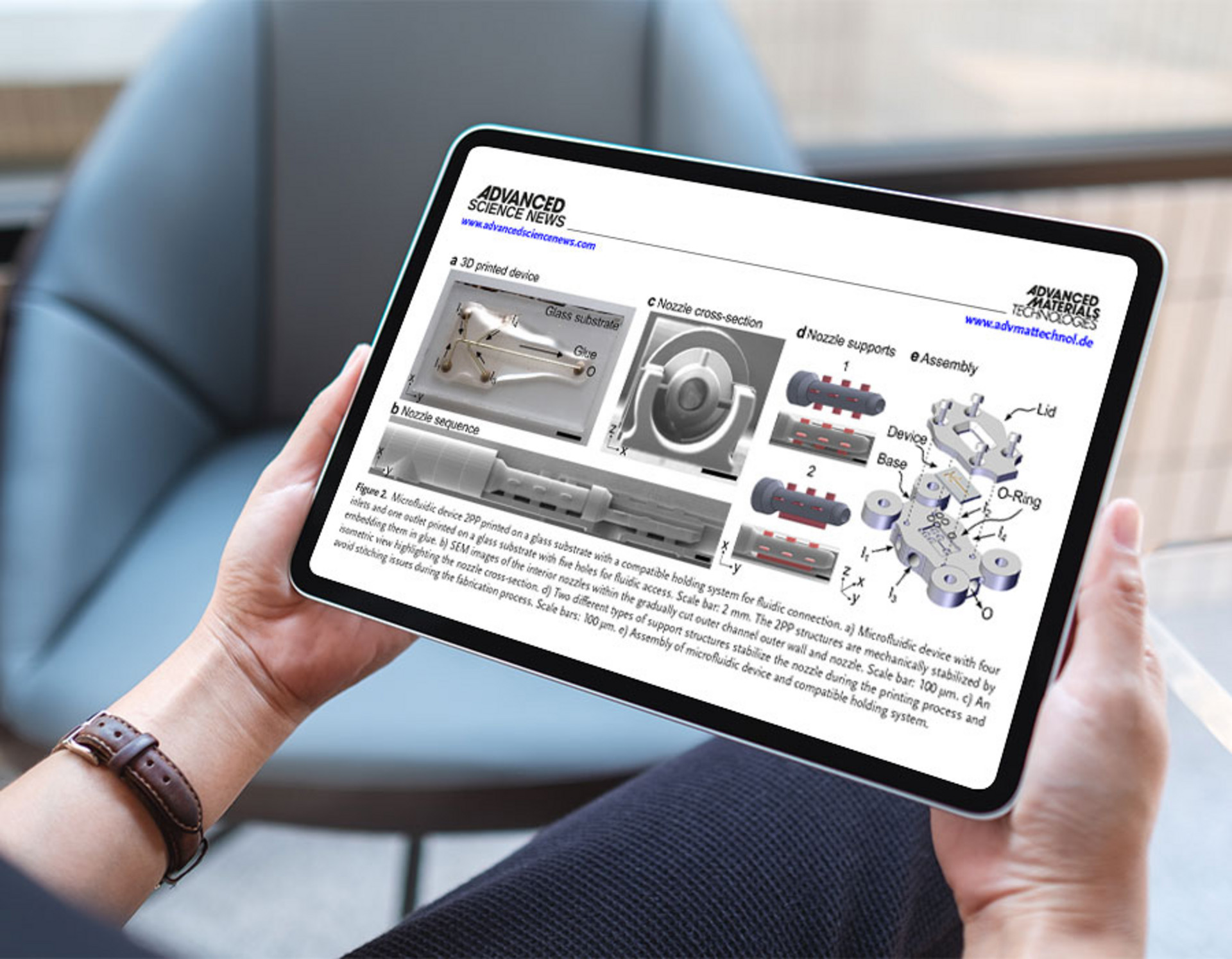
Authors: H. Werner, E. Taiedi Nejad, M. Akif Sahin, M. Leuthner, P. Erfle, O. Hayden, A. Dietzel, G. Destgeer
Affiliation: Technical University of Munich, Technische Universität Braunschweig
Journal: Advanced Materials Technologies, 10, 2500203 (2025)
Droplet‐Based Synthesis of Nanogels for Controlled Drug Delivery...
Authors: V. Matining, C. Colli, E. Jacchetti, G. Nicoletti, L. Rosanò, M. T. Raimondi, B. M. Colosimo, E. Mauri, D. Moscatelli
Affiliation: Politecnico di Milano, National Research Council (CNR)
Journal: Advanced Materials Technologies, 10, no. 19, e00108 (2025)
Diffusive micromixing combined with dynamic in situ laser scattering...
Authors: E. Taiedinejad, C. Bausch, J. Wittek, G. Gül, P. Erfle, N. Schwarz, M. Mozafari, M. Baßler, A. Dietzel
Affiliation: Technische Universität Braunschweig, Fraunhofer-Institut für Mikrotechnik und Mikrosysteme IMM
Journal: Scientific Reports 14, 24356 (2024)
3D nanofabrication inside rapid prototyped microfluidic channels...
Authors: J. Lölsberg, J. Linkhorst, A. Cinar, A. Jans, A. J. C. Kuehne, M. Wessling
Affiliation: DWI Leibniz Institute for Interactive Materials, RWTH Aachen
Journal: Lab on a Chip, 18 (9): 1341–1348 (2018)